
Adoption, or more precisely the legal placement of a child, is not a hardship in itself. It is certainly a challenging time, but it can also bring a lot of joy. That has been the case with our adoption of Jaś, and similarly for many biological parents. However, in our situation there are additional difficulties we must face, ones that biological parents do not necessarily encounter.
Labelling
Just a few days after taking Jaś (John) into our care, we experienced our first unpleasant situation when we went with him to our clinic for the second time. I already described this in the post “The found puzzle – Jaś“, but I will repeat it here. As soon as we walked in and introduced ourselves, the doctor loudly blurted out: “Oh, this is the adopted one”.
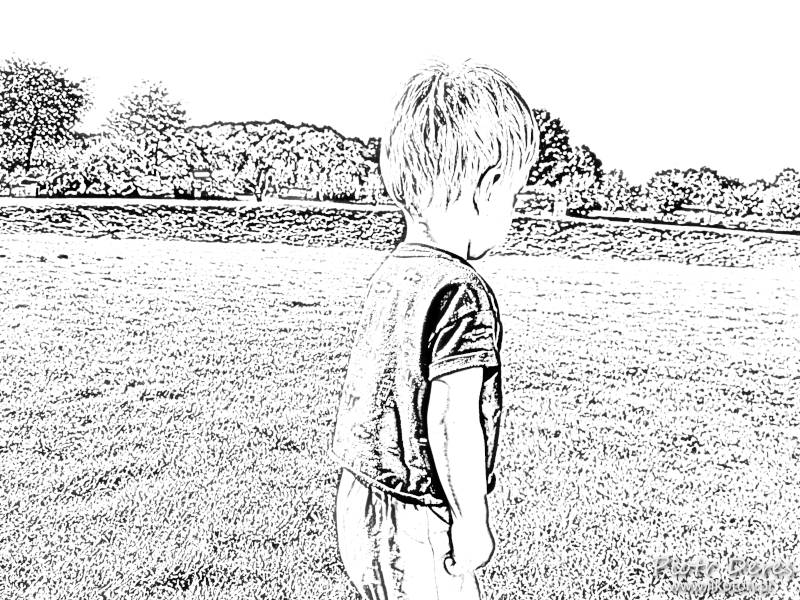
Yes, Jaś is adopted, and we do not hide that. But he is our child, and it is hurtful that right at the beginning of our adoptive journey he was immediately labelled as “the adopted child.” We know, and are prepared for the fact, that this label may follow him for a long time, especially in educational institutions.
Advice and lecturing
Advice that you ask for can be valuable. Unsolicited advice, however, is a different story—especially when it concerns adopted children. I mean comments like: “Don’t carry him so much, he’ll get used to it”, “A child should sleep in their own bed”, or “He should go to preschool so he doesn’t become wild”. After all, we should listen to people who have raised two or more children—they have experience we should supposedly rely on.
Regardless of whether you are a biological or adoptive parent, a child needs closeness, especially from their parents. In biological families, this closeness begins to form when the baby is still in the mother’s womb. A bond is created then, and later it is worth nurturing—though not everyone remembers that.
For adoptive parents, things look a bit different. Here, the bond must be built, among other things through closeness. That is why it is important to provide that closeness whenever the child needs it. We see how much it has helped Jaś—not only during the day but also at night, when he sleeps between us. Carrying a 15–16 kg child is physically exhausting, but it strengthens the relationship.
Unfortunately, people who believe they are giving “good advice” often fail to understand that reality is different. And that is painful, especially when those people are close to us. We spent a long time training to become the best adoptive parents we can be, and we continue to grow in that direction. We are not perfect, but we move forward instead of relying on methods passed down through generations.
Lack of understanding
When we began sharing with our loved ones that we were training to become adoptive parents, most reacted positively. Sometimes there was shock or disbelief, but those were rare.
Before we met Jaś, we explained what adoption looks like, what it involves, and what rules must be followed. We repeated the same information when we announced that our family was expanding with an almost four‑month‑old boy. Everyone seemed to understand and accepted the limitations we introduced—for example, that during the first meetings no one should try to pick him up, which is important for building attachment.
Life, however, showed that this initial understanding was only an illusion. Repeatedly explaining that meetings should be calm rather than chaotic did not help. Many people did not grasp that such a small child can have trauma and may need specialist support, which is why his behaviour may differ from what they expect. For them, an infant is a being that remembers nothing, has no awareness or feelings—so what problem could there possibly be? Some even try to bypass our rules, sometimes through manipulation, which is extremely disappointing.
We also encounter a lack of understanding regarding food. Jaś requires a special diet because he has a cow’s milk protein allergy, so we prepare appropriate meals for him. When we go to gatherings, we bring thermoses with his food, which is sometimes poorly received. People offer us dishes supposedly identical to what we prepared, but they usually contain ingredients our son cannot eat. Because how could you possibly serve cauliflower without topping it with breadcrumbs fried in butter? Apparently, we are “making things up”.
Unfortunately, habits are stronger than the willingness to learn. Meanwhile, we are considered strange and accused of harming our child by not giving him such “treats”.
Downplaying
I already mentioned some examples of downplaying, but I want to return to this topic. It is an important issue we face—more and more often, it seems.
Since Jaś entered our lives, the first time our concerns were dismissed was by the paediatrician at our clinic. It was just a few days after we brought him from the Family Children’s Home. We suspected that Jaś could not tolerate cow’s milk because he had a bloated stomach and vomited frequently. We shared our concern with the doctor, but we were ignored. It is sad that someone who should help dismissed our—ultimately correct—suspicions.
Many people also downplay Jaś’s diet. Some claim it is nonsense because “everyone eats what he supposedly can’t”. Others say that if he tries something once or a little bit, nothing will happen. Explaining that this is not true and describing how badly cow’s milk affected him does not help.
We have also encountered situations where people either test us or simply do not understand that if Jaś cannot drink cow’s milk, he also cannot eat butter. Or that if he cannot eat wheat flour, he cannot have a breaded cutlet. It is absurd.
This approach has made us wary. We no longer trust people who offer Jaś food that he “should be able to eat”. We do not want him to be given a meatball containing wheat breadcrumbs just because “that’s how the recipe is”.
Another issue that is often downplayed is the child’s psychological well‑being. Despite explanations about the impact of pregnancy or broken attachment, even young people do not believe it. For them, children remember nothing—so what are we talking about? We are slowly giving up on trying to convince them and instead begin to ignore such comments, though it is painful.
It is even more hurtful when this attitude comes from a child psychologist. Jaś had an appointment with such a psychologist when he turned 1.5 years old. For three days afterward he had diarrhoea, and then he began reenacting at home what he failed to do during the session. He failed because the psychologist did not adjust the test or its duration to his age. Jaś was deeply affected, but we managed to stabilise the situation.
What lies ahead?
I do not know what awaits us. But based on the materials we studied and meetings with adoptive families, we know the most difficult period is still ahead. Even now, life with an almost two‑year‑old boy is not easy. Jaś requires a lot of attention, which we try to give him. It is hard to keep him in one place, and he often cannot control his strength, which can be dangerous. We know where this comes from and will work on it.
School will likely be even more challenging, when Jaś may be labelled as “the adopted one” and perhaps “the troublemaker”, though that does not have to happen. Time will tell, but we are already preparing ourselves and trying to prepare him.
When we decided to adopt, we knew we were adopting a child, his history, and his biological family. Unfortunately, many people struggle to understand this. For some, we are odd. For others, we are overreacting or making things up. It is very hurtful and unfair, but we can handle it.
Fortunately, we are not alone in these difficulties. We rely on the knowledge of experienced people, the support of the adoption centre, and the Diagnostic and Consultation Point of the Adoptive Families Foundation. We also have contact with people—both close and more distant—who truly understand us, sincerely, not just to appear supportive.

Leave a Reply